

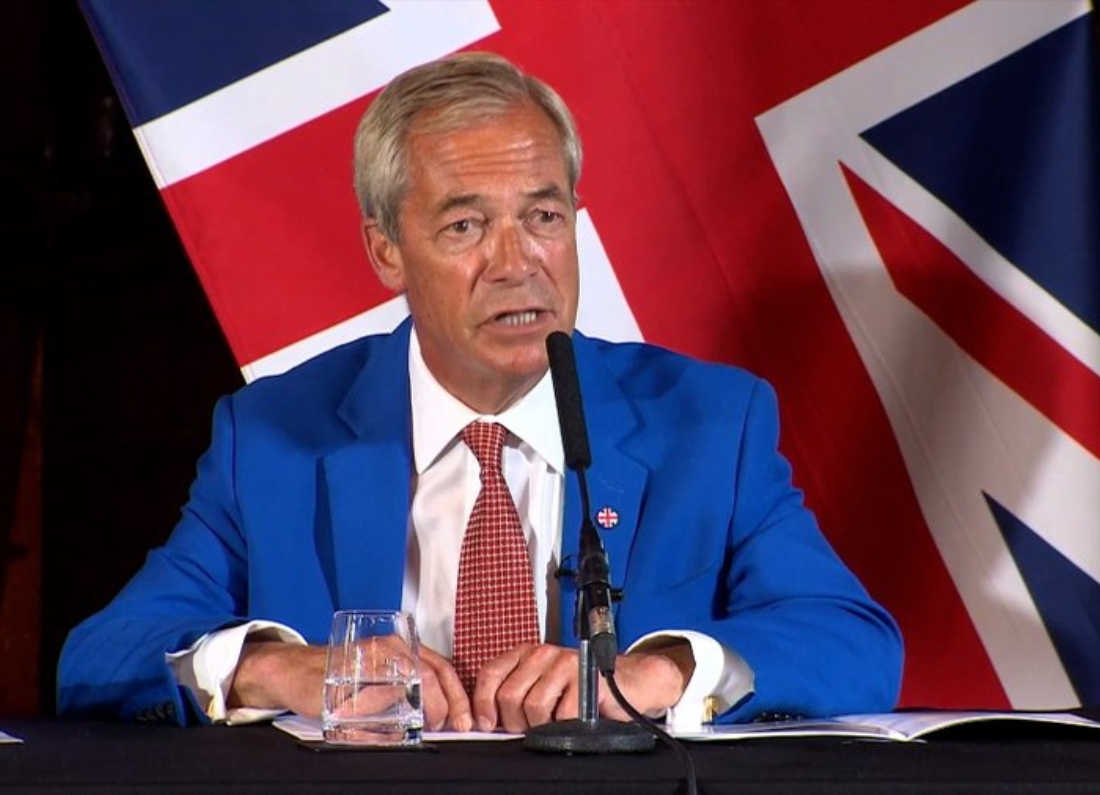
A Reform UK-run council has rejected a proposal calling for all councillors to obtain DBS checks, sparking a row over safeguarding and transparency.
The motion at Barnsley Council called for every elected member to obtain and maintain an appropriate Disclosure and Barring Service certificate during their term in office.
It also proposed enhanced checks for councillors involved in relevant safeguarding roles, a new council protocol setting out how checks should work, and an annual report on compliance.
But the proposal was rejected after opposition from Reform UK councillors, who hold a commanding majority on the authority following this year’s local elections.
Council leader William Brown argued that the motion went beyond what councils are legally required to do and described it as a political gesture rather than an effective safeguarding measure.
The dispute raises a wider question which extends far beyond Barnsley: should people elected to councils be subjected to criminal record checks simply because they hold public office?
At the moment, the answer under national law is no.
What did the motion propose?
The proposal was brought forward by Liberal Democrat councillor Dickie Denton and seconded by fellow Lib Dem councillor Carl Snowden.
The motion said councillors hold positions of “trust and privilege” and argued that public confidence depends on appropriate safeguarding measures being in place.
Under the proposals, every councillor would have been asked to obtain an appropriate DBS certificate and keep it up to date throughout their term.
Basic checks would have been paid for by councillors themselves, while the council would have covered the cost of enhanced checks where those were required.
The authority would also have been instructed to produce a formal DBS and safeguarding protocol within three months.
An annual anonymised update on compliance would then have gone before the Standards Committee.
Finally, the chief executive would have been asked to write to ministers, MPs and the Local Government Association calling for clearer national rules on DBS checks for councillors.
Reform leader says election itself carries public trust
Brown opposed the proposal and argued there was currently no legal requirement for elected councillors simply to hold a DBS certificate.
He said councillors already occupy a position of public trust because they have been elected by residents.
According to comments reported by The London Economic, Brown said: “Being elected itself does not hold a legal duty to hold a DBS certificate. That is the law today, not my opinion.”
He also accused supporters of the proposal of presenting a local policy as though it could substitute for national legislation, describing the motion as a “gesture”.
That central legal point is correct.
There is currently no universal statutory requirement for every councillor in England to undergo a DBS check simply because they have been elected.
Any individual can apply for a basic DBS check, but enhanced checks are subject to eligibility rules and are generally connected to particular responsibilities or types of work.
But government guidance already recommends checks in some cases
The absence of a blanket legal requirement does not mean the issue has been ignored nationally.
An independent review of the Disclosure and Barring regime, led by former senior police officer Simon Bailey, recommended that enhanced criminal record checks should become mandatory for councillors in unitary and upper-tier authorities who are being considered for committees dealing with children’s services or vulnerable adults.
The review concluded that there was too much variation between councils and said checks should be carried out consistently where safeguarding responsibilities justified them.
In January 2024, the then Local Government Minister wrote to councils urging them to adopt that recommendation as best practice while legislation was considered.
The guidance specifically encouraged enhanced checks for councillors being appointed to committees handling education or social services functions.
So while Brown is right that no law currently requires every councillor to hold a DBS certificate, there is already government-backed guidance supporting enhanced checks for councillors carrying out certain roles.
That distinction sits at the centre of the argument.
Other councils already go further
Barnsley would not have been breaking entirely new ground by introducing broader checks.
A number of councils already operate their own policies.
Dorset Council, for example, expects all councillors to undergo enhanced DBS checks, even though it acknowledges it cannot legally compel an elected member to do so unless national legislation changes.
Its policy says the approach is intended to protect people councillors work with and maintain confidence in public life.
Nottinghamshire County Council also requires councillors to undergo enhanced DBS checks because the authority and its committees exercise education and social services functions.
Other councils have taken more limited approaches.
Swale Borough Council previously considered introducing basic checks for all elected members, while enhanced checks have often been reserved for councillors involved directly in safeguarding-related responsibilities.
There is therefore no single approach across local government.
Some authorities expect checks from all councillors, some require or encourage them only for particular roles, and others do not routinely use them.
Liberal Democrats accuse Reform of rejecting transparency
Denton criticised the decision after the motion was rejected.
He said Reform UK had campaigned on greater transparency and argued the proposal gave the administration an opportunity to demonstrate that commitment.
He described himself as “extremely disappointed and surprised” by the outcome and said public trust in politics remained fragile.
His criticism was political rather than a finding of wrongdoing, and there is no suggestion from the motion itself that Barnsley councillors are suspected of criminal offences.
The argument is instead about what safeguards should exist as a matter of principle.
Reform now dominates Barnsley Council
The dispute comes just months after a dramatic political change at Barnsley Council.
Reform UK won 42 seats in the May 2026 local elections, giving it a large majority on the 63-seat authority.
Labour was reduced to 11 councillors, while the Liberal Democrats won eight seats and independents took two.
That result gave Reform control of a council which had historically been dominated by Labour and left the party with the numbers to determine most votes at full council.
Brown now leads the authority.
What does a DBS check actually reveal?
A basic DBS check shows unspent convictions and conditional cautions.
Enhanced checks can contain substantially more information, including spent and unspent convictions and cautions subject to filtering rules, as well as relevant information held by police where disclosure is considered appropriate.
Not every job or public role is eligible for an enhanced check.
The independent review into councillors specifically noted that eligibility usually arises where elected members are involved in decision-making connected to social services, health, education, children or vulnerable adults.
That is one reason the debate is more complicated than simply asking whether councillors should be “checked”.
A council can encourage basic checks much more broadly, but the use of enhanced DBS checks has to satisfy legal eligibility requirements.
Should the rules be national rather than local?
The Barnsley motion itself acknowledged the wider problem.
One of its proposals was for the council to ask the Government to introduce national legislation or clearer guidance.
That could eventually settle a question councils have been answering differently for years.
An elected councillor is not an employee of the council in the ordinary sense, and councils cannot simply dismiss an elected member because they dislike the result of a DBS check.
Existing law sets specific circumstances in which someone can be disqualified from holding office.
Even councils which operate comprehensive DBS policies acknowledge those limitations.
Dorset Council’s policy, for example, says information revealed by a check may affect committee appointments or safeguarding responsibilities, but an elected councillor would only cease to hold office where the law actually disqualified them.
That creates an unusual situation.
Councillors can make decisions affecting children, vulnerable adults and major public services, yet there is still no single nationwide system determining exactly when they should undergo criminal record checks.
Barnsley’s Reform administration has rejected one attempt to introduce such a system locally.
The bigger question may now be whether Parliament eventually decides councils should no longer have to make that choice themselves.









Leave a Reply