


Almost three-quarters of Britons describe Nigel Farage as “sleazy”, according to polling that raises questions about Reform UK’s claim to offer a clean break from the established political parties.
The YouGov survey found that 73 per cent regarded the Reform leader as either very or fairly sleazy. That included 56 per cent who chose “very sleazy”.
Reform UK received a similarly negative verdict, with 71 per cent describing the party as sleazy and 52 per cent selecting the strongest available answer.
Perhaps most troubling for Farage is the finding that 41 per cent of people who voted Reform at the 2024 general election now apply the description to him.
However, the results should not be presented as a sudden reaction to the latest controversy surrounding Reform’s finances. YouGov said perceptions of both Farage and his party were broadly unchanged from July.
The more significant shift has taken place over a longer period, with the proportion describing Reform as sleazy rising by 20 percentage points over the last two years.
Farage receives the worst personal rating
YouGov asked respondents how sleazy they considered several political parties, governments and individual leaders.
Farage recorded the most negative personal result.
Seventy-three per cent described him as at least fairly sleazy, compared with 51 per cent for former prime minister Keir Starmer and 46 per cent for Green Party leader Zack Polanski.
Prime Minister Andy Burnham was considered sleazy by 35 per cent, while Conservative leader Kemi Badenoch received 33 per cent. Liberal Democrat leader Ed Davey recorded the lowest figure among the politicians tested at 28 per cent.
The distinction became even greater when respondents were asked whether each politician was “very sleazy”. Farage received that description from 56 per cent of the public.
The full YouGov results were based on a weighted sample of 2,371 adults in Great Britain. Fieldwork was conducted on September 6 and 7.
Reform’s anti-establishment image faces a problem
Reform has built much of its appeal around the argument that Westminster’s traditional parties are discredited and cannot be trusted to change the country.
The poll suggests that a large majority of the public does not regard Reform as being insulated from the reputational problems affecting its competitors.
Seventy-one per cent described Reform as sleazy, placing it level with the Conservative governments that held power between 2019 and 2024 and marginally above the 70 per cent who said British governments were generally sleazy.
The current Labour government was considered sleazy by 55 per cent. The Conservative Party under its present leadership received 53 per cent, while the Greens were on 38 per cent and the Liberal Democrats recorded 32 per cent.
Reform’s position has worsened considerably since 2024. Its sleaze rating has increased by 20 points over that period, although the Greens also experienced a 20-point rise.
The findings therefore reveal a broader distrust of politics, but Farage and Reform remain at the most negative end of the scale.
Four in ten Reform voters call Farage sleazy
The results from Reform’s own 2024 voters may be the most politically significant.
Forty-one per cent described Farage as sleazy, while 35 per cent applied the same description to Reform UK.
By comparison, between 15 and 17 per cent of the respective 2024 voters for Labour, the Conservatives and Liberal Democrats described their current party leader as sleazy.
Reform voters were also more likely than supporters of other parties to believe sleaze was a normal feature of government. Eighty-nine per cent described British governments in general as sleazy.
That does not necessarily mean those voters have abandoned Reform. Someone can regard a politician as sleazy while continuing to support their policies or considering the alternatives worse.
A separate YouGov voting intention poll, conducted over the same period, placed Reform and Labour level on 23 per cent. The Conservatives were on 20 per cent.
The figures underline the difference between reputation and electoral support. Reform can remain competitive even while a sizeable proportion of its own voters express doubts about Farage’s character.
Financial controversies place Reform under scrutiny
The polling was published as Reform faced renewed questions about its finances and internal controls.
A Channel 4 News undercover investigation recorded senior party figures James Orr and Dan Jukes discussing potential funding arrangements with reporters posing as representatives of a wealthy American businessman.
The proposed donor was fictional and no money was transferred.
The Metropolitan Police subsequently opened a criminal investigation into allegations arising from the footage. Orr and Jukes stepped away from their roles while Reform began its own internal inquiry, as The Daily Britain previously reported.
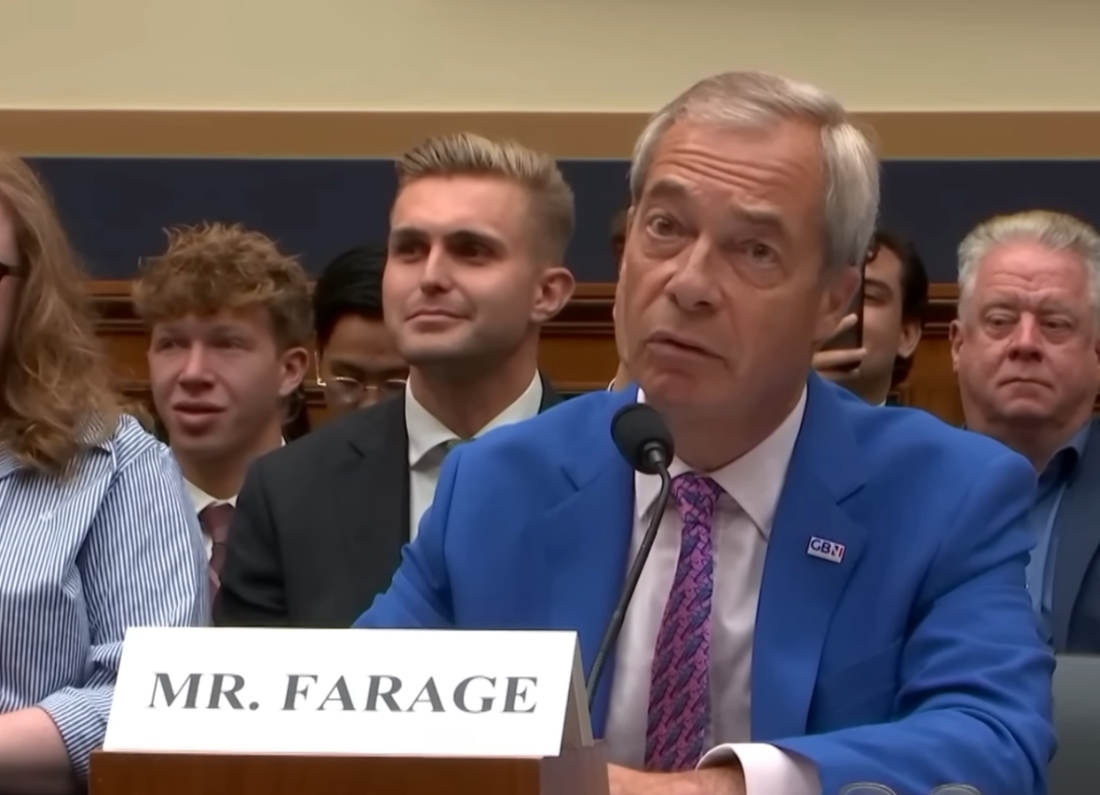
Farage was present during part of the undercover operation and maintained that he had been assured the proposed arrangement was legal.
During an interview with Robert Peston, he said he was “100 per cent confident” that Reform had never used an illegal route to receive foreign money. He attributed one of Jukes’s most damaging comments to “loose pub talk”.
Peston told him that the controversies were beginning to resemble a pattern and questioned whether Reform had developed a culture in which corners were being cut.
The party has denied accepting illegal foreign donations and says it has not broken electoral law.
Separate investigations continue
The Channel 4 investigation is not the only financial issue facing Reform and its leader.
Police have also been investigating £500,000 in donations made to the party by Fiona Cottrell, the mother of Farage’s longstanding associate George Cottrell.
Farage is separately subject to a parliamentary standards inquiry concerning a £5 million personal gift from cryptocurrency investor Christopher Harborne.
The inquiry is examining whether the gift should have been entered in the register of MPs’ financial interests. Farage has maintained that it was a personal gift and did not need to be declared.
Reform and Farage deny wrongdoing in relation to the allegations surrounding their finances.
These investigations have not resulted in findings of guilt, and an investigation should not be treated as evidence that an offence has been committed.
They do provide the political backdrop to a poll in which the public has placed Farage and Reform alongside the institutions they have repeatedly condemned.
Latest scandal has not caused another fall
The timing of the poll may encourage claims that the Channel 4 footage immediately damaged Reform’s public standing.
YouGov’s comparison with its July results does not support that conclusion.
The proportion describing Farage as sleazy remained at 73 per cent, while Reform’s figure moved from 69 to 71 per cent. That difference is within the normal margin of error for a survey of this size.
The underlying problem for Reform is therefore not a sudden collapse following one story. It is that negative perceptions built up over the previous two years have become entrenched.
Farage continues to attract enough support to keep Reform competitive with Labour. The poll suggests he is doing so despite the public’s view of his reputation, rather than because voters see his party as free from Westminster sleaze.





Leave a Reply