

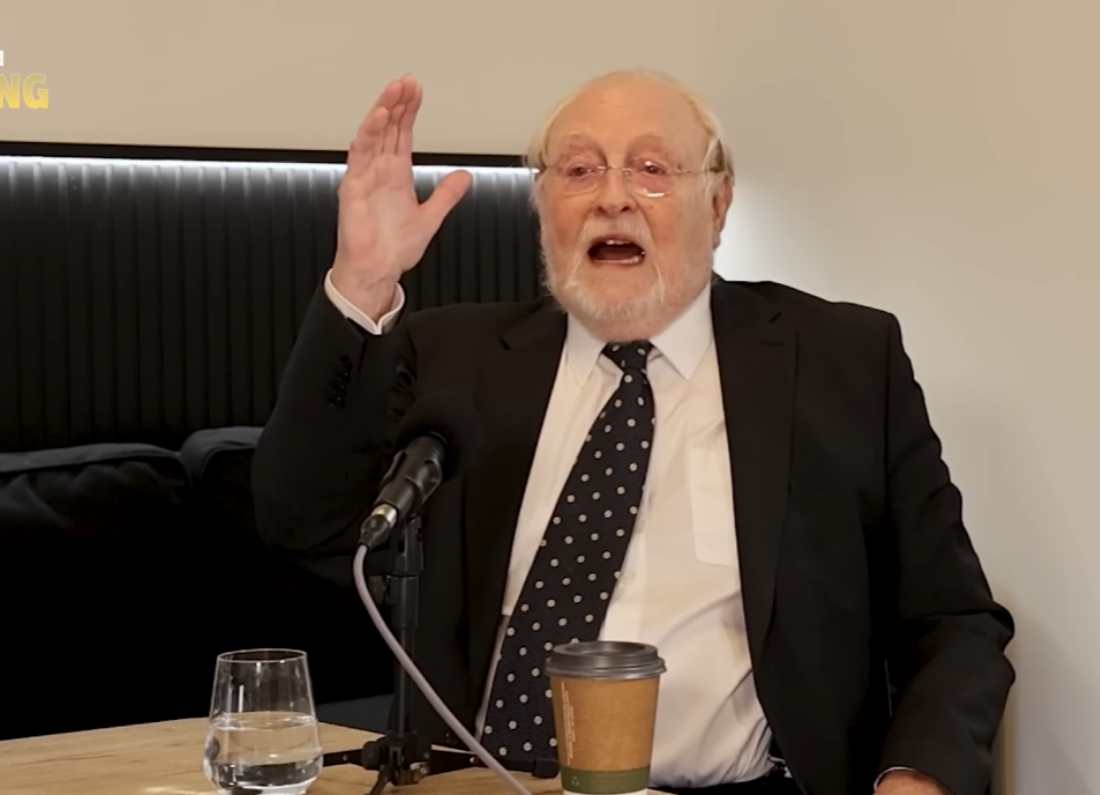
Neil Kinnock and David Blunkett are backing proposals to make voting compulsory, with people who fail to return a ballot facing a £10 fine.
The Labour grandees are expected to support an amendment to the Representation of the People Bill when it reaches the House of Lords.
Under the proposal, voters would not have to choose a candidate. Returning a blank or spoiled ballot would satisfy the legal requirement to participate.
Kinnock said compulsory voting was becoming “increasingly justified and necessary” as turnout continued to fall.
The former Labour leader warned:
“When turnouts have fallen for various negative reasons, election results are consequently distorted.”
The intervention puts pressure on Prime Minister Andy Burnham, who has already promised to make the case for electoral reform before the next general election.
What compulsory voting would mean
Baroness Jan Royall is expected to table the amendment, with support from Kinnock, Blunkett and former Scotland minister Lord Foulkes.
The proposal would create a legal duty to participate in UK parliamentary and local elections in Great Britain.
Voters could meet that duty by returning a ballot in person, by post or through a proxy. They could vote for a candidate, spoil the ballot or leave it blank.
Anyone who failed to take part without a valid reason could receive a £10 civil penalty. Proposed exemptions include illness, disability, absence from the UK, religious duties and conscientious objections.
Supporters therefore argue that the policy would require participation rather than force people to endorse a political party.
Written evidence submitted to Parliament also proposes pilot schemes and a review by the Electoral Commission before any wider rollout.
Kinnock warns of ‘distorted’ results
Kinnock spent around a decade living in Belgium, where voting is compulsory. He said the system helped sustain political engagement in a country with complicated linguistic, regional and political divisions.
He argued that persistently low turnout weakened accountability and allowed disengagement from public life to become normal.
Blunkett, who served as home secretary under Tony Blair, is also reported to support the amendment. Both men have been described as political mentors to Burnham.
The proposal comes after turnout at the 2024 general election fell to approximately 60 per cent, the lowest level at a UK general election since 2001.
By comparison, turnout at Australia’s 2025 federal election was around 91 per cent. Australia has required eligible citizens to vote in federal elections since 1924.
The headline turnout figure also disguises substantial differences between groups. Evidence submitted to Parliament found that older people, homeowners and higher-income voters were considerably more likely to vote than younger people, renters and those in lower-income households.
Supporters of compulsory voting say those gaps give politicians an incentive to concentrate on people who already vote while paying less attention to those who regularly stay at home.
Burnham previously refused to rule it out
Burnham has considered the argument before.
In 2012, he said he would not rule out compulsory voting because turnout was “getting too low to ignore”.
His government has not adopted the policy. During a recent House of Lords debate, elections minister Baroness Taylor said the immediate priority was removing barriers that prevented people from voting.
She pointed to plans for automated voter registration and said the government had no current plans to hold a compulsory voting pilot.
Taylor also said between seven million and eight million eligible voters were missing from the electoral register. Research cited by the Electoral Commission has identified a lack of information about candidates, distrust in the political system and the complexity of voting as barriers to participation.
That leaves Burnham with two separate questions. One is how to make registration and voting easier. The other is whether participation should eventually become a legal obligation.
The wider argument over electoral reform
Compulsory voting is only one part of a growing argument inside Labour about how elections should work.
Nearly 100 Labour MPs have supported calls for a national commission on electoral reform, while MPs from several parties have demanded changes to the first-past-the-post system.
Burnham has committed himself to electoral reform but has not set out when legislation would be introduced or confirmed which replacement voting system he would support.
The 2024 election produced one of the most disproportionate results in modern British history. Labour secured a large Commons majority with around a third of the national vote, while smaller parties won far fewer seats than their share of the vote suggested. Our guide to first past the post explains how that happens.
Opponents of compulsory voting make a different democratic argument. They say the freedom to vote must include the freedom not to vote, and that forcing people to return a ballot does not guarantee genuine political engagement.
There would also be practical questions over enforcement. A £10 fine may be small, but a nationwide system would still require officials to identify non-voters, assess exemptions and pursue unpaid penalties.
Supporters reply that jury service and taxation already impose civic duties, and that returning a blank ballot would preserve the right to reject every available candidate.
The proposal is not yet government policy. It does, however, ensure Burnham will face the argument from influential figures within his own party as the Representation of the People Bill moves through Parliament.
One response to “Kinnock and Blunkett urge Burnham to make voting compulsory with £10 fine”
-
Why should anyone be forced against their will to vote for a party that you don’t entirely support, trust, or don’t believe in, or share the same views with?
Democracy is about freedom of choice. Political dictators, such as the likes of ‘Vladimir Putin’ will force people towards supporting him through lack of democratic choices and take every and any action available illegal or not to eliminate any opposition.
By criminalising people in the UK for not voting or supporting political parties against their will is surely a step away from true democracy and rather a turn towards dictatorship style politics, because effectively you’d be saying, ‘it’s illegal for you not to vote for me, therefore I rule’…which ever party won the most forced votes.







Leave a Reply