

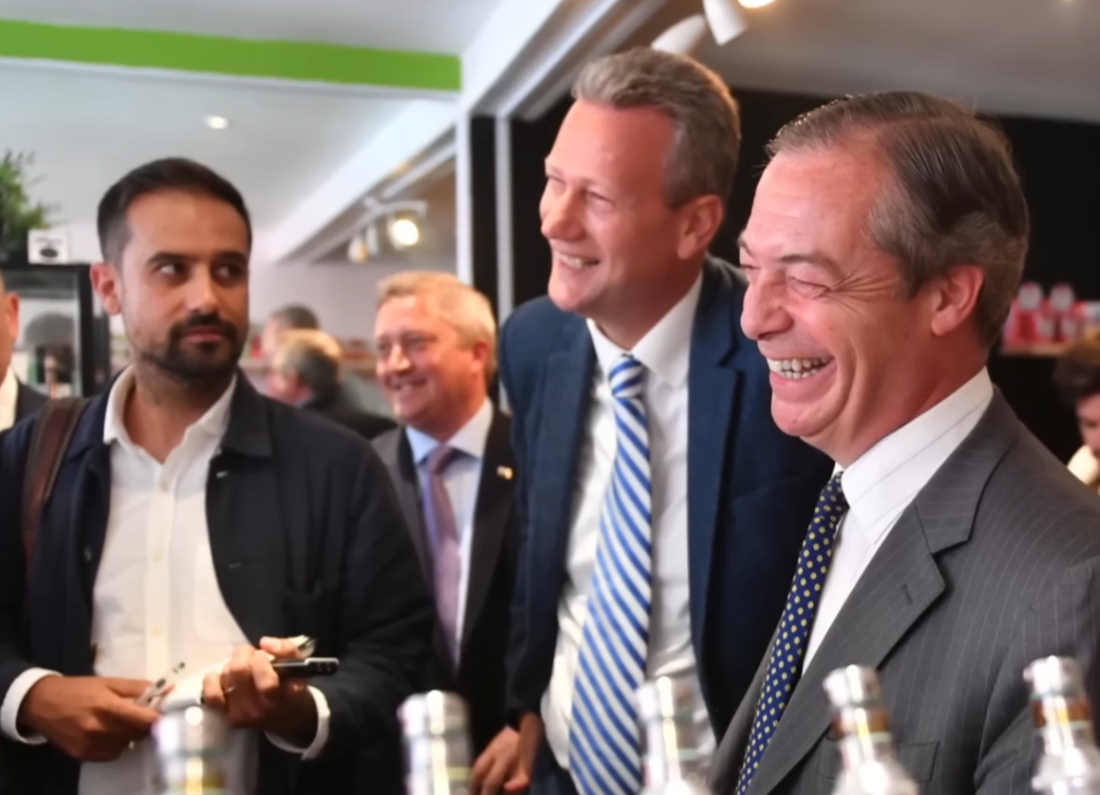
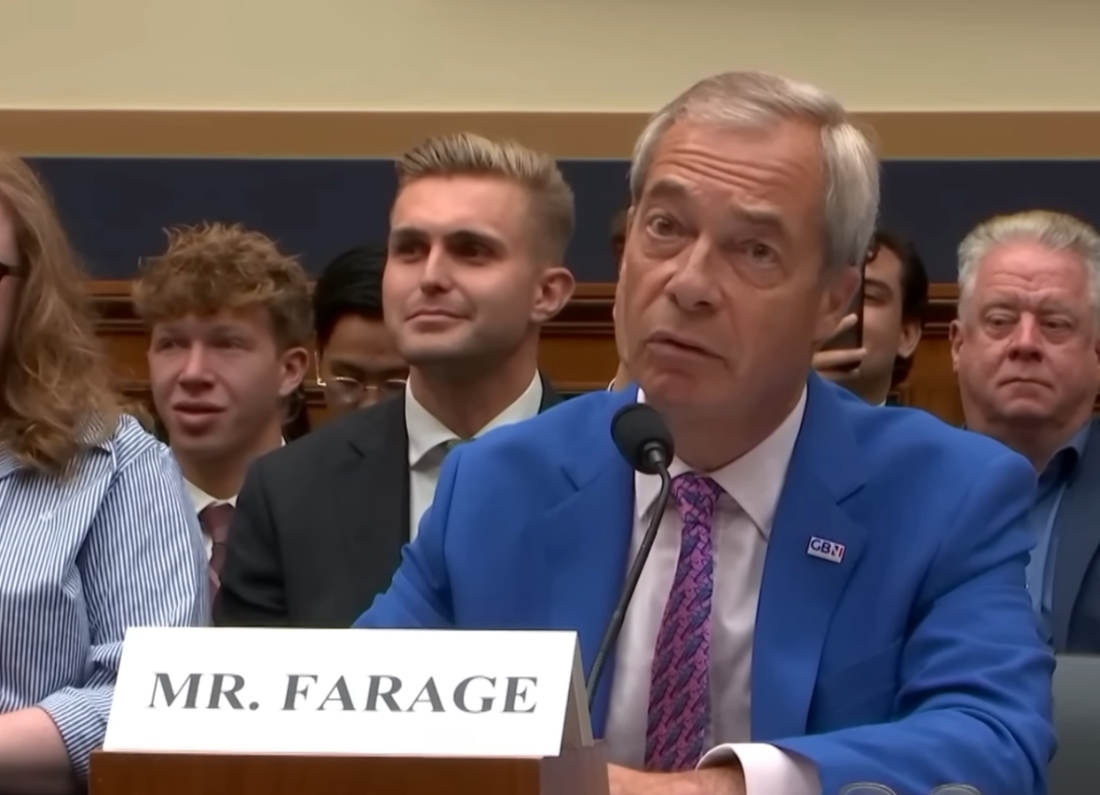
Nigel Farage has accused Andy Burnham of using Russia as an “excuse” to establish a government body that will restrict free speech.
The Reform UK leader was responding to Burnham’s announcement of a National Centre for Information Defence, which will be tasked with identifying and disrupting information attacks carried out by hostile states.
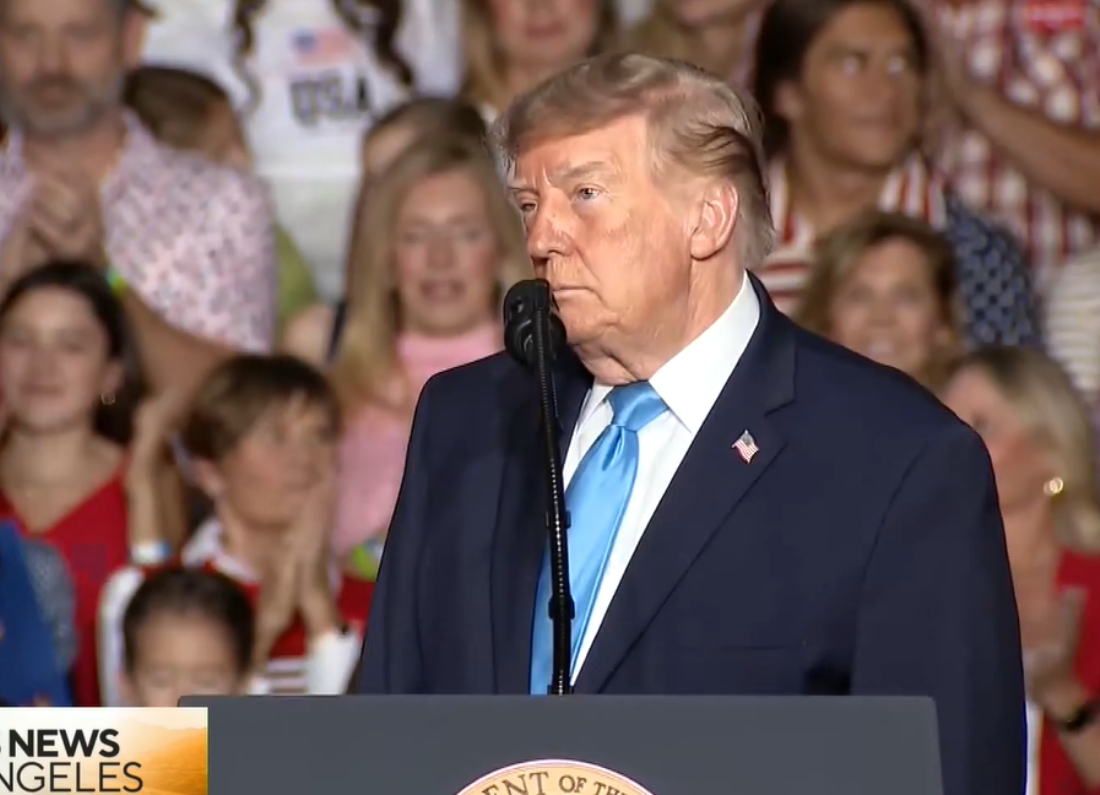
“Andy Burnham is setting up a Ministry of Truth to clamp down on free speech,” Farage wrote alongside a 51-second video statement.
In the video, he said:
“This will be like George Orwell’s Ministry of Information. This will be used to clamp down on free speech.”
Burnham announced the new centre during his first speech to the United Nations General Assembly as prime minister.
Burnham accuses Russia of ‘industrial-scale assault’
In his UN address, Burnham said Britain and its allies were facing an “industrial-scale assault” on their information systems.
He accused Russian agencies of using bots, fake websites, falsified newspaper reports and material carrying the forged branding of 28 British organisations, including universities and the BBC.
“Russian agencies have used every means at their disposal to spread lies and disinformation and prey on people’s fears,” Burnham said.
“They’ve used bots and fake websites. Falsified newspaper articles. Forged the branding of 28 British organisations, including universities and the BBC. They’ve amplified far-right narratives.”
Burnham also said the government had evidence of an attempt to interfere in the 2019 general election, although he did not release that evidence during the speech.
He claimed the Kremlin spends around £1.3 billion each year manipulating information and accused Moscow of exploiting tragedies and political divisions to provoke unrest.
“We’re talking about an insidious campaign that reaches into people’s homes and twists what they feel about their own country and community, creating a narrative of decline, stoking division and sowing despair.”
The new centre will be instructed to “detect, attribute and disrupt” hostile state information attacks. It is expected to involve the intelligence agencies, law enforcement bodies and social media companies.
Burnham said Britain would also share information with other countries facing Russian interference, pointing to UK support for Moldova during its elections.
What powers will the new centre have?
The government has not yet published the centre’s budget, staffing arrangements, launch date or detailed legal powers.
It has also not confirmed whether the organisation will be established in law or how its decisions will be independently reviewed.
Those questions matter when a government body is being asked to investigate information distributed online.
However, the proposal did not originate solely with Burnham. Parliament’s Foreign Affairs Committee recommended a public-facing National Counter Disinformation Centre in March.
The committee said the body should be established on a statutory basis and subjected to parliamentary oversight. It proposed a remit focused on foreign information manipulation directed against Britain and its interests.
In its response, the government said it was focused on hostile deception rather than “regulating political views or lawful disagreement”.
Burnham’s announcement did not give the centre any stated power to ban ordinary political opinions. Farage’s “Ministry of Truth” description is his warning about how the organisation could be used, rather than a description of powers already announced.
The government will still need to publish clear limits. A body created to protect democratic debate would quickly lose credibility if its remit expanded into judging legitimate domestic political arguments.
Nathan Gill case hangs over Reform’s response
Farage’s intervention comes less than a year after Nathan Gill, a former Reform UK leader in Wales, was jailed for accepting bribes in return for making pro-Russian statements.
Gill, who also served as a UKIP MEP, pleaded guilty to eight bribery offences after accepting around £40,000 between 2018 and 2019. He was sentenced to ten and a half years in prison.
Prosecutors said Gill agreed to make speeches, submit parliamentary questions and arrange media appearances intended to benefit pro-Russian interests.
Farage’s response also revives an awkward vote from his Brexit Party years.
In October 2019, Farage and his Brexit Party MEPs voted against a European Parliament resolution calling for stronger action against foreign electoral interference and Russian disinformation.
The resolution passed by 469 votes to 143. It called for stronger measures against foreign electoral interference and proposed upgrading the EU unit responsible for identifying and challenging Kremlin propaganda.
Brexit Party MEP David Bull defended the opposition by saying the party would “always vote against more power and spending by the EU”.
He also dismissed concerns about Russian interference as:
“Baseless propaganda and scare stories used to shut down debate.”
Gill’s bribery offences covered December 2018 to July 2019, months before the vote. There is no evidence that Farage or other Brexit Party MEPs knew he had been accepting money.
Reform condemned Gill’s actions after he was sentenced, describing them as “reprehensible, treasonous and unforgivable”. Farage called him a “bad apple” and said he felt betrayed by someone he had believed to be honest.
None of that makes Farage responsible for Gill’s crimes. It does mean the threat dismissed by the Brexit Party was already operating within the political group in which its own representatives worked.
Farage previously claimed Russia hacked his phone
Farage has repeatedly rejected suggestions that he or Reform are sympathetic to the Kremlin.
Earlier this year, he went further and claimed Russian intelligence had hacked his phone, email and bank accounts using a spear-phishing operation.
Farage said he believed the attack was how information about a £5 million gift from businessman Christopher Harborne reached The Guardian.
Labour subsequently referred Farage’s claim to the police and National Cyber Security Centre after he did not confirm that Reform had reported the alleged attack itself.
Reform has also faced criticism over candidates promoting arguments favourable to Moscow. Its former Makerfield candidate Robert Kenyon claimed Russia was “well within their rights” to annex Crimea.
Farage is therefore not disputing that Russian information operations exist. He has claimed to be a victim of one himself.
His argument is that Burnham’s response risks giving the British state too much control over political speech.
The answer will depend on the centre’s final remit. Burnham has promised an organisation targeting hostile foreign operations. Farage says it will become a tool for restricting dissent.
Security chiefs must now produce the details that show what the centre will investigate, which powers it will possess and who will hold it accountable.



Leave a Reply