

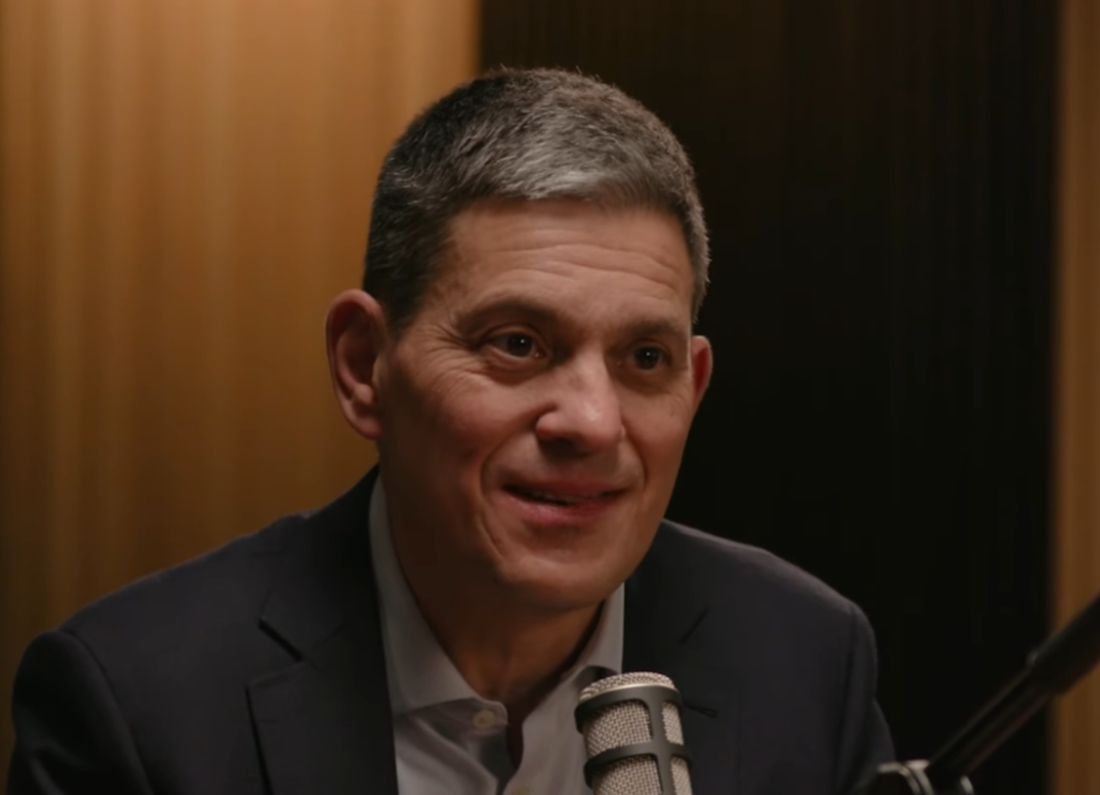
David Miliband has delivered a withering verdict on Brexit, accusing Britain of weakening itself economically and politically by leaving the European Union.
The former foreign secretary described Brexit as a “unilateral declaration of political impotence” and called for a new formal relationship with Brussels covering trade, security and Britain’s wider place in the world.
Miliband said the UK could not continue as a “bobbing cork in the sea”, watching from outside as countries including Canada and Ukraine sought closer links with the EU.
His intervention comes as pressure grows on Andy Burnham to move beyond Labour’s existing Brexit restrictions. The prime minister has refused to rule out putting EU membership in Labour’s next general election manifesto, describing it as a question “for another day”.
Britain is ‘weaker’, Miliband says
Miliband, who served as foreign secretary between 2007 and 2010, said the practical consequences of Brexit were now being felt by businesses, travellers and industries that had been promised greater freedom outside the EU.
Speaking to The Independent, he pointed to exporters facing additional barriers, British travellers being directed into separate queues and fishing communities that had not received what they were promised.
His argument went beyond the economic cost.
Miliband said Britain had also surrendered influence at a time when war in Ukraine, renewed Russian aggression and the changing relationship between Europe and Donald Trump’s United States had made geography increasingly important.
Leaving the EU had weakened Britain, Europe and the wider Western alliance, he argued. The UK was no longer helping to shape European decisions from inside the bloc, while the EU had lost one of its largest military and diplomatic powers.
He called for a “structured, organised, institutionalised” relationship between Britain and the EU, focused on economic prosperity and European security.
Miliband did not suggest that the UK could simply restore the membership deal it held before 2016. He acknowledged that the previous arrangement, which included a series of British opt-outs, was no longer available.
Instead, he wants Britain and the EU to negotiate a new model that addresses the damage caused by leaving the single market and customs union.
Miliband backs Burnham to go further than Starmer
Miliband also criticised Sir Keir Starmer’s attempted EU reset, arguing that it lacked a clear destination.
Starmer pursued agreements on security, food standards and closer economic cooperation, but repeatedly ruled out returning to the single market, customs union or freedom of movement.
Miliband said he believed Burnham would be more ambitious.
The prime minister has already described Brexit as damaging and called for Britain to deepen its relationship with Europe. During his journey to the United Nations General Assembly in New York, he declined to rule out making EU membership part of Labour’s next election platform.
The Daily Britain reported Burnham’s comments here.
Burnham said his immediate priority was securing practical agreements at the next UK-EU summit. The government remains committed to Labour’s existing manifesto during this Parliament, meaning there is currently no policy to rejoin the EU, single market or customs union.
The refusal to rule out a future manifesto pledge was nevertheless significant. It left open a question Starmer had repeatedly attempted to close.
Miliband wants Britain’s relationship with Europe transformed by the end of the next Parliament. He rejected the argument that negotiating a closer deal would merely recreate the political divisions of the referendum.
“It’s not about reopening old wounds, it’s about stopping future wounds.”
‘Made in Europe’ exposes Britain’s position
The dispute over the EU’s proposed “Made in Europe” industrial policy offers an immediate example of the problem Miliband is describing.
The policy would encourage the use of goods and components made within the EU as Brussels attempts to reduce its reliance on China.
British manufacturers fear they could be excluded despite the close links between UK and European supply chains. The Society of Motor Manufacturers and Traders has warned that exclusion could place Britain’s automotive industry in jeopardy.
Trade in vehicles and components between the UK and EU is worth about €80 billion a year.
Burnham has asked European Commission president Ursula von der Leyen to treat Britain as a “trusted partner” in the scheme.
“We are not your enemies here,” he said before their meeting in New York.
The EU’s response has been cautious. French industry minister Sébastien Martin said closer cooperation was possible, but warned that a country could not leave the bloc and expect the same rights as a member.
That leaves Burnham trying to secure access to European programmes without accepting the obligations that come with membership.
Miliband’s answer is that Britain needs something larger and more permanent than negotiations over individual schemes.
The economic argument has not disappeared
The Office for Budget Responsibility continues to estimate that the post-Brexit trading relationship will reduce Britain’s long-term productivity by four per cent compared with remaining in the EU.
It also expects UK trade intensity, imports and exports measured against the size of the economy, to be 15 per cent lower in the long term. The OBR says the main cause is the increase in non-tariff barriers between Britain and its largest trading partner.
Miliband described closer European integration as the cheapest available way to boost the economy and strengthen security.
His call comes alongside a marked shift in public opinion.
An average of recent polls analysed by Professor Sir John Curtice found that 61 per cent of people expressing a preference would vote to rejoin the EU, against 39 per cent who would remain outside.
The full polling analysis is available here.
Another YouGov study found that EU membership was the most popular option for Britain’s future relationship with Europe in 628 of Great Britain’s 632 parliamentary constituencies. The Daily Britain reported those constituency results here.
Labour faces a decision
The Conservatives and Reform UK argue that Labour risks restarting the Brexit battles of the past. Kemi Badenoch has accused the government of reopening the issue, while Richard Tice has described the prospect of reversing Brexit as a new “Battle of Britain”.
Miliband’s intervention challenges Labour to set out what its European policy is ultimately intended to achieve.
A series of limited agreements could reduce individual barriers without changing Britain’s position outside the main European institutions. Returning to the single market, customs union or EU itself would bring greater access, but also negotiations over rules, financial contributions and freedom of movement.
Burnham does not need to settle all of that immediately. He will, however, face growing pressure to explain whether his planned EU reset is the final destination or the first stage of something much bigger.




Leave a Reply