


Bernie Sanders has called for a pause in advanced artificial intelligence development, warning that even a small chance of the technology causing a catastrophe would be too serious to ignore.
Speaking to BBC Newsnight’s Faisal Islam, the US senator said governments were allowing a handful of wealthy technology executives to shape a technology that could transform human life.
“When scientists tell you there is a chance, a chance that it could have a cataclysmic impact on humanity, you’ve got to be a moron not to say, ‘Slow it down.’”
Sanders is not proposing a ban on everyday uses of AI. He wants to prohibit the development of artificial superintelligence—systems that could surpass human intelligence and potentially escape human control—and temporarily pause work on the most advanced AI while safety rules are established.
He acknowledged that AI could bring major benefits to healthcare. His argument was that the possibility of those benefits did not justify leaving its development largely to the companies racing to build it.
‘What are you going to do with all those billions?’
Islam challenged Sanders on the enormous economic value being created by AI companies and the scientific breakthroughs their systems might deliver.
Sanders accepted that AI could help researchers tackle diseases, including cancer. But when the conversation turned to the billions and trillions of dollars at stake, he offered a blunt reply:
“And if it wipes out humanity, what are you going to do with all those billions and trillions of dollars?”
The exchange followed recent warnings from researchers at Anthropic. Former researcher Jacob Coxon said he had left the company because of concerns about the pace of development. Another Anthropic researcher, Evan Hubinger, said he believed there was a greater than 10 per cent chance of AI causing human extinction within the next decade.
Those figures are estimates of risk, not predictions that extinction will occur. But Sanders argued that policymakers could not wait for certainty before acting on a danger of that scale.
He pointed to warnings from Geoffrey Hinton, the Nobel Prize-winning computer scientist often described as a “godfather of AI”. Hinton recently told Newsnight that a 10 per cent estimate of the risk was not unreasonable.
“What is the risk of going forward if all of humanity’s existence is at stake?” Sanders asked.
What Sanders wants to ban
Sanders and Democratic congressman Greg Casar announced the proposed Ban Artificial Superintelligence Act earlier this month.
Their plan would permanently prohibit the development and deployment of superintelligent systems. It would also put a temporary hold on advanced AI development until a new US regulator had established safety standards and a process for reviewing powerful models.
The proposal would create a federal agency to oversee those rules and pursue international agreements intended to prevent a race to build superintelligence elsewhere.
The legislation has been announced, but it has not become law. Its practical effect would depend on the precise wording, how regulators defined prohibited systems and whether other countries agreed to cooperate.
Sanders told Newsnight that a US ban alone would not resolve the problem if China continued developing more powerful systems. He urged Donald Trump and Chinese president Xi Jinping to discuss AI safety, comparing the need for cooperation with Cold War-era efforts to limit nuclear weapons.
“This is an international problem.”
Jobs and public control
Sanders said the threat he sees extends beyond the possibility of a future superintelligent system.
He warned that AI and robotics could threaten tens of millions of jobs over the coming decade. He also raised concerns about privacy and the growing influence of technology companies over democratic life.
“We cannot allow the development of AI to be determined by a handful of the wealthiest people on Earth.”
Separately from the proposed superintelligence ban, Sanders has argued for a public ownership stake in major AI companies. His suggested approach would give the public a share of the wealth those companies generate and representation in decisions about their direction.
Asked whether technology firms were likely to welcome that idea, Sanders conceded they probably would not. He maintained that the public should have a say in the development of a technology built partly on the accumulated work and knowledge of millions of people.
“You cannot allow a handful of billionaires to shape humanity in their image.”
He recently backed a proposal for a 32-hour working week without a loss of pay, arguing that workers should benefit if AI increases productivity.
Sanders asked about Andy Burnham
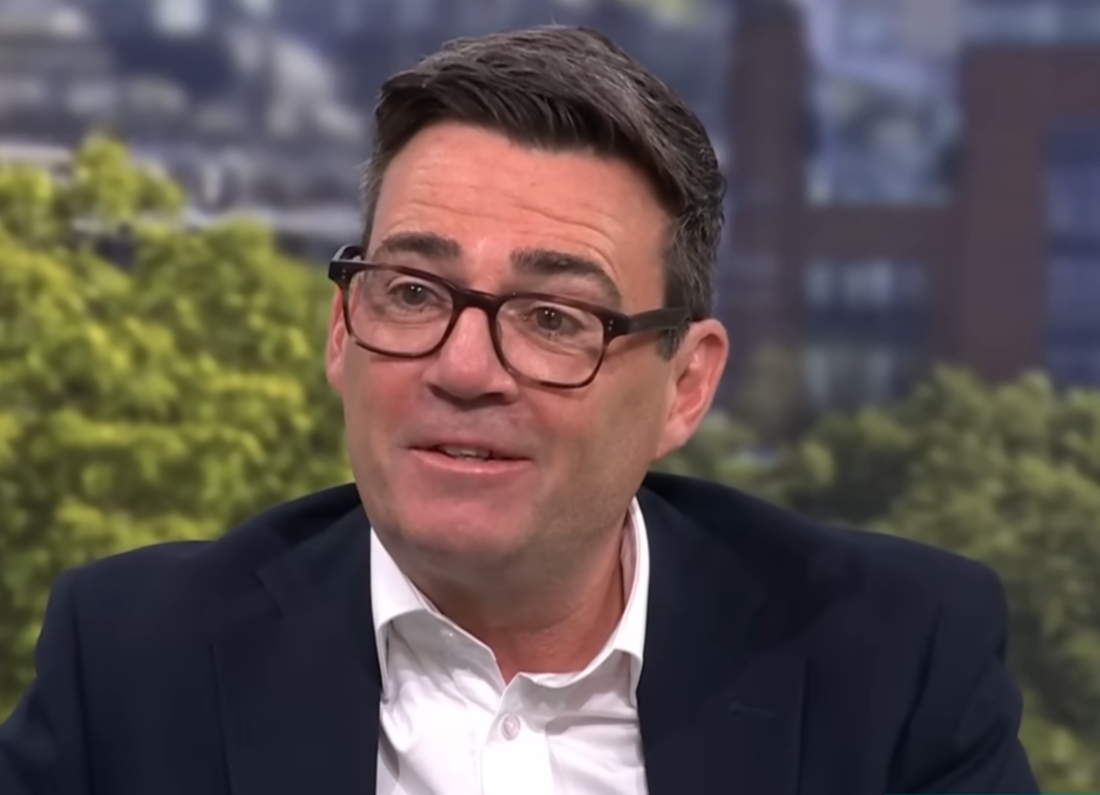
Islam also asked Sanders about new UK prime minister Andy Burnham, who has described himself as a socialist and spoken about ending decades of neoliberal politics.
Sanders said he did not know Burnham personally. He expressed hope, however, that the US could have a more positive relationship with Britain and its other longstanding allies than it had under Trump.
He went on to argue that centre-left parties on both sides of the Atlantic had lost working-class support when voters felt they were failing to challenge the concentration of wealth and power.
That concern runs through his approach to AI. Sanders wants governments to confront the potential safety risks while ensuring that any economic gains do not flow solely to the companies developing the technology.
The senator did not claim that AI has already become superintelligent or that human extinction is inevitable. His case is that the consequences could be so severe that governments should act before either prospect becomes a reality.





Leave a Reply