A Republican congressman has described Keir Starmer as a “leftist weenie” in a television interview during King Charles’s state visit to Washington – in comments that reveal the extent of Republican hostility toward the British Prime Minister, even as the King himself publicly defended Starmer’s leadership by name in his Congress speech.
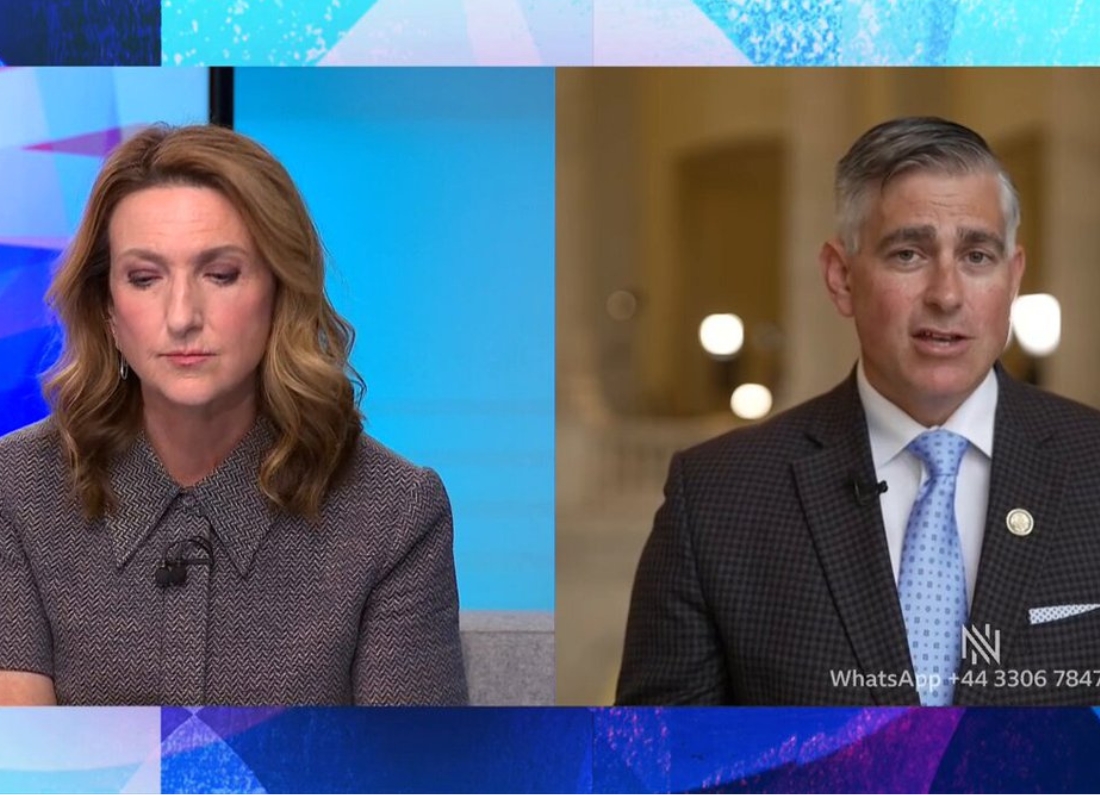
Michael Baumgartner, the Republican representative for Washington’s 5th congressional district, made the remarks on BBC Newsnight while praising King Charles’s address to Congress on Tuesday.
“As Republicans, what I think the chamber heard as much was King Charles speaking to Britain, and reassuring America that Britain will do what’s necessary and have a capable military,” Baumgartner told the programme. “As opposed to Keir Starmer who is looked at as a leftist weenie, we saw in King Charles someone who is proud of Britain – and I think that is good.”
Who is Michael Baumgartner?
Baumgartner is a first-term congressman from Eastern Washington state, born in Pullman, Washington in 1975. He studied economics at Washington State University and earned a master’s degree from Harvard in international development before working as an economic affairs officer with the US State Department in Iraq and as an economic adviser to the US military.
Notably, Baumgartner met his wife Eleanor – who is British – when both were working in Afghanistan. He told reporters after the Congress speech: “Being married to someone from Britain and visiting the country frequently, I care about the relationship both as a policy maker and on a personal level.” His personal connection to Britain makes his remarks about Starmer more pointed rather than less – this is not a congressman who is unfamiliar with the country whose prime minister he is attacking on international television.
The military spending argument
Baumgartner’s broader point – beyond the memorable phrase – was that he interpreted Charles’s Congress speech as a message to Britain as much as to America, urging the UK to increase its defence spending and “do what’s necessary” to remain a capable military partner.
“I think what the king displayed is a Britain that’s proud of its history and our shared values,” he said. “I appreciated his words on our shared cultural values and military cooperation, and I was pleased that he stayed above the American political fray. What I didn’t want to hear was a lecture from the king, and he certainly did not give a lecture.”
The defence spending criticism echoes Trump’s own long-running complaints about NATO members failing to spend enough on their militaries and relying on American support. Starmer’s government has committed to raising UK defence spending to 2.5% of GDP by 2027, rising to 3% in the next parliament and NATO’s target of 3.5% by 2035. Lord Robertson, the former NATO secretary-general who authored the government’s own defence review, has however said the pace of that increase is inadequate given the current threat environment.
The King’s rebuke – inadvertent or otherwise
There is a significant irony in Baumgartner’s framing of Charles as an implicit critic of Starmer. In the very same Congress speech Baumgartner was praising, Charles made a point of publicly identifying himself with the British Prime Minister – something a constitutional monarch is not required to do and almost never does on foreign soil.
“Our Alliance cannot rest on past achievements, or assume that foundational principles simply endure,” Charles said. “As my Prime Minister said last month: ‘Ours is an indispensable partnership. We must not disregard everything that has sustained us for the last eighty years. Instead, we must build on it.'”
The phrase “my Prime Minister” – deployed in a joint session of the US Congress, in front of the entire Trump administration – was a public expression of confidence in Starmer’s leadership. Whatever Baumgartner’s interpretation of the wider speech, the King chose to quote Starmer directly and describe him as his own prime minister to the American legislature. That is not the behaviour of a monarch signalling dissatisfaction with his government.
Charles’s speech also contained multiple lines that sit in direct contrast to Republican positions – praising NATO, defending checks and balances on executive power, backing Ukraine, and championing diversity. The bipartisan standing ovations the speech received suggest most members of Congress heard it rather differently from Baumgartner.
The wider context
The “leftist weenie” comment is unlikely to cause a formal diplomatic incident, but it captures something real about the current state of Republican opinion toward the British Prime Minister.
Trump has compared Starmer to Neville Chamberlain. He has called the special relationship “sad.” He has threatened to rip up the UK-US trade deal over Starmer’s refusal to back the Iran war. Republican politicians have echoed and amplified those criticisms.
From a Republican perspective, Starmer’s refusal to support US military operations in Iran, his pursuit of a closer relationship with the EU, and his domestic policy programme place him in the category of European social democrat that the American right finds ideologically alien. The phrase “leftist weenie” is crude – but it reflects a genuine view that Starmer is the wrong kind of ally.
Whether that view is shared by the King is, on the evidence of Tuesday’s Congress speech, another matter entirely.
You can watch it below:
You may also like: ‘If it wasn’t for us, you’d be speaking French’: King Charles roasts Trump at White House state dinner